
Financing marketplaces, guarantee systems, receivables exchanges and asset-distribution infrastructure that connect lenders, borrowers, guarantors and ecosystem participants at market scale. Built by Veefin. Proven in production.
A bank's products serve its customers — a loan for a borrower, a facility for a corporate, an account for a depositor. Financing infrastructure is a different kind of thing. It doesn't serve one institution's customers; it connects the participants of an entire market — borrowers and lenders, anchors and their suppliers, guarantors, distributors and platforms — and lets capital move between them. A financing product helps one institution deploy capital. Financing infrastructure helps many institutions deploy capital together.
That distinction runs through this whole page. Building a financing product means serving your own customers better. Building financing infrastructure means becoming the rail a market runs on — the place where many institutions meet to do business none of them could do alone.
Few technology companies have built infrastructure at that level. Fewer still operate it. Veefin does both.

Two of the clearest examples of financing infrastructure anywhere are built and run by Veefin.

Built and operated by Veefin under a long-term mandate from a consortium of twelve publicsector banks, PSB Xchange is a national financing marketplace — spanning supply chain finance, trade finance and broader MSME and corporate financing — opened beyond its founding consortium to other banks and NBFCs across the country. One marketplace; many lenders, many anchors, a national base of borrowers.
Veefin runs the technology behind Kafalah, Saudi Arabia's national SME credit-guarantee program, providing the web interface and the full guarantee-system stack that carries a guarantee through its whole lifecycle — origination, management and claims — at national scale.
Together, they prove something narrow and hard to fake: that Veefin can build and operate financing infrastructure at ecosystem scale. The software matters. But the harder challenge is designing the operating model, the governance framework, the participant incentives and the workflows that let many institutions operate on the same rail — and that expertise cannot be coded into existence.
A financing product and a piece of financing infrastructure grow in completely different ways.
A product grows one customer at a time. Every new borrower is a sale, won and served individually. Useful — but linear.
Infrastructure grows by connecting participants. Each lender that joins a marketplace makes it more attractive to anchors; each anchor brings its suppliers; more suppliers and more volume draw in more lenders. Every participant added makes the rail more valuable to every participant already on it — and the institution that operates the rail sits at the centre of all of it.
That position creates strategic leverage. The operator sees market activity first, attracts new participants more easily, shapes how capital flows through the ecosystem, and becomes harder to bypass as the network grows.
That is why financing infrastructure is a fundamentally stronger position than a financing product. A product gives a bank a better way to serve its customers. Infrastructure gives an institution a position in the market itself — one that grows more valuable, and harder to displace, with every participant it adds.

Multi-lender rails connecting lenders, anchors and borrowers (the model behind PSB Xchange).

The full lifecycle stack behind a national SME guarantee programme (the technology behind Kafalah).

Platform technology for licensed exchange operators (the technology behind TReDS-model exchanges).

The layer that separates origination from funding, so capacity outgrows any one balance sheet.
Financing infrastructure isn't one thing. It takes different forms for different markets — a marketplace, a guarantee system, a receivables exchange. Each is a model an institution can launch on Veefin technology, and two of them already run at national scale.
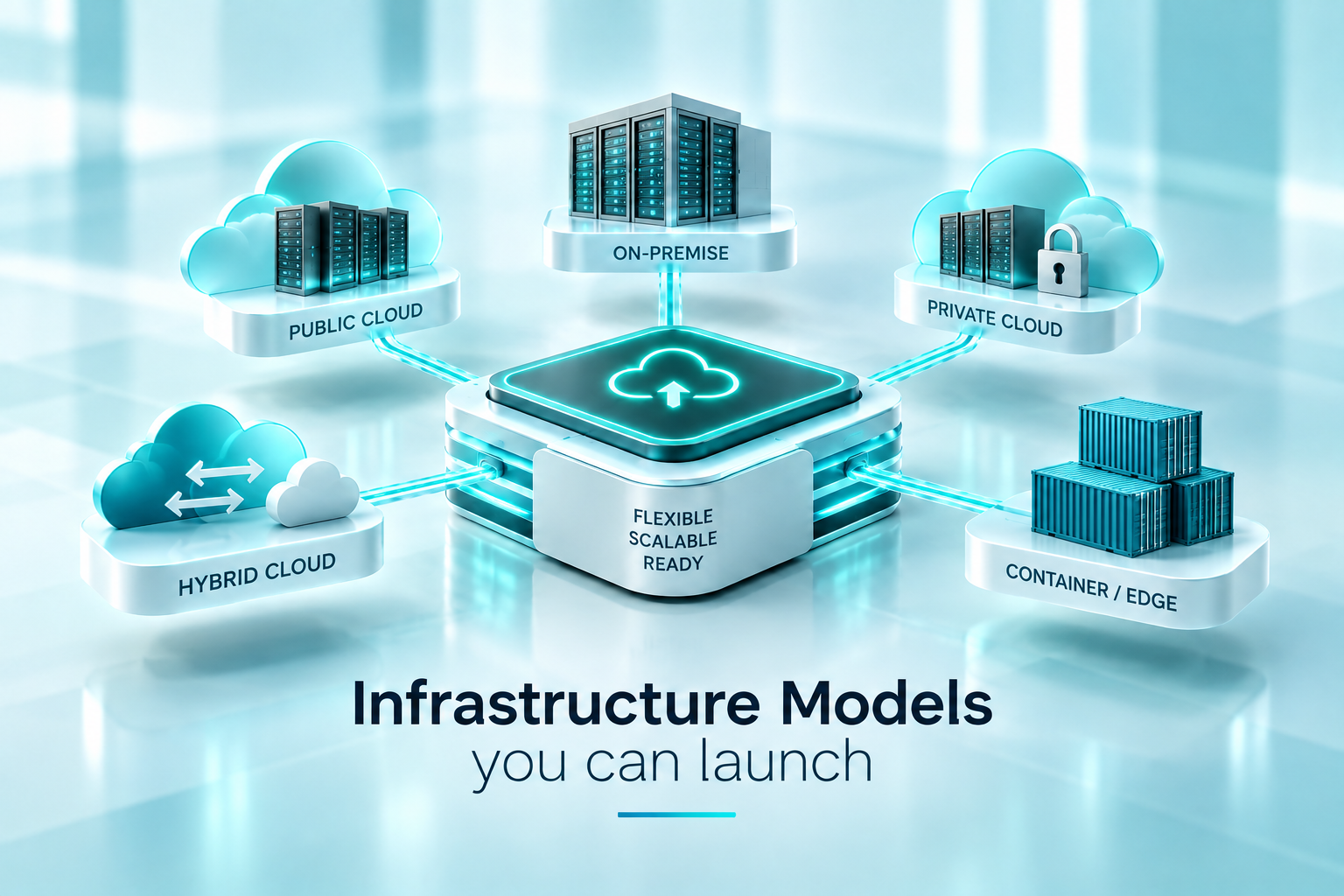
A financing marketplace connects multiple lenders, anchors, borrowers and ecosystem participants on a common rail. The model powers national marketplaces such as PSB Xchange, and can be adopted by consortiums, large financial institutions and market operators seeking to expand access to capital at scale. And capital that originates on the marketplace doesn't have to stay there: financing assets can be distributed onward to additional capital providers — separating origination from funding, and expanding financing capacity beyond an institution's own balance sheet.
The full guarantee-system stack behind a national SME credit-guarantee program — the technology behind Kafalah. It carries a guarantee through its whole lifecycle, from origination through management to claims, and gives a guarantee agency or development institution the system to run a national program end to end. The model is repeatable: the same infrastructure that runs one national guarantee program can stand up another.
A receivables exchange lets financiers compete for trade receivables on a transparent marketplace — improving liquidity for businesses and creating an efficient mechanism for allocating capital to where it is needed. In India, this model is represented by TReDS, the RBI-regulated receivablesexchange framework under the Payment and Settlement Systems Act, 2007. Veefin supplies the platform technology to the institutions licensed to operate these exchanges — it is the technology behind the marketplace, not the operator of it.
Each of these is a different way to become the rail a market runs on — connecting participants, moving capital, and creating financing capacity at scale.
What it enables: a market, not just a product — the institution that launches the rail sets its standards, convenes its participants and earns from every transaction that crosses it. And because two of these models already run at national scale, launching one is a deployment decision, not an experiment.
Most financing systems stop at origination. A bank funds an invoice, discounts a receivable or finances a supply-chain payable — and the asset stays on its own balance sheet. Growth then runs into the limits every balance sheet has: capital, concentration limits, funding capacity. A bank can only finance as much as it can hold.
Financing infrastructure becomes far more powerful when origination and funding are separated. If the institution that originates an asset doesn't have to be the one that funds it, capacity stops being capped by a single balance sheet — the originator keeps the customer relationship and the deal flow, other capital providers fund the assets, and everyone does more.
This is what a distribution layer does. Veefin's Asset Distribution Platform distributes financing assets to additional capital providers — banks, NBFCs, funds and other investors seeking exposure to the asset class — separating origination from funding on infrastructure built for it. And it doesn't require building anything new. An institution doesn't need to launch a marketplace to benefit from distribution: the platform is designed to sit on top of the systems a bank already runs — its supply chain finance, trade finance and receivables-financing systems, including those already in production — and distribute the assets already flowing through them. The origination is already there; distribution is what extends it.
Because the distribution layer sits above origination, it works across every source.
A financing marketplace, a receivables exchange, an existing supply chain finance or trade finance system, a lending program — any of them can originate, and the distribution layer moves those assets onward to the capital providers best placed to fund them.
The result is financing capacity that grows without the balance sheet growing with it: more capital providers, lower concentration, and the room to keep originating well beyond what any one institution could fund alone. Originate once. Fund many times.
National-scale financing infrastructure has hard requirements: it has to connect many institutions, integrate with the systems each of them already runs, and operate with the security and governance a national platform demands. None of it is bespoke. This infrastructure runs on Veefin 4.0 — the architecture beneath every Veefin product — with VECTOR handling connectivity between participants and their systems, shared services and one governance and control model underneath.
It is the architecture already proven by the infrastructure earlier on this page: PSB Xchange and Kafalah run on it. An institution building with Veefin isn't commissioning a one-off platform; it is building on a foundation already operating at national scale.
Most technology vendors can sell a financing product. Very few have built the infrastructure a market's capital flows through — and fewer still operate it. Veefin does both, at national scale, today.
Building the technology is only half the challenge. Financing infrastructure succeeds when lenders, borrowers, sourcing partners, guarantors, distributors and regulators can operate together on the same rail — and that is the harder half. Veefin brings both: the technology to build the infrastructure, and the operating experience of running it at national scale.
The next rail doesn't have to be built from scratch.