
Delinquency worked in time order — digital self-cure, behaviour-prioritised telecalling and field work, governed legal recovery, and conduct compliance throughout — on one strategy and the full borrower history.
Delinquency is a timing business. Every week a slipping account waits for the month-end list, the cure gets dearer and the odds get worse — and most collections operations are built to wait: lists sorted by amount, worked in order, staffed for the accounts that shout loudest rather than the ones that can still be saved. Run recovery on behaviour instead — earliest signal, right account, full history in hand — and the bank recovers more, spends less doing it, and keeps customers a blunter process would have lost. A customer cured early is a customer kept.
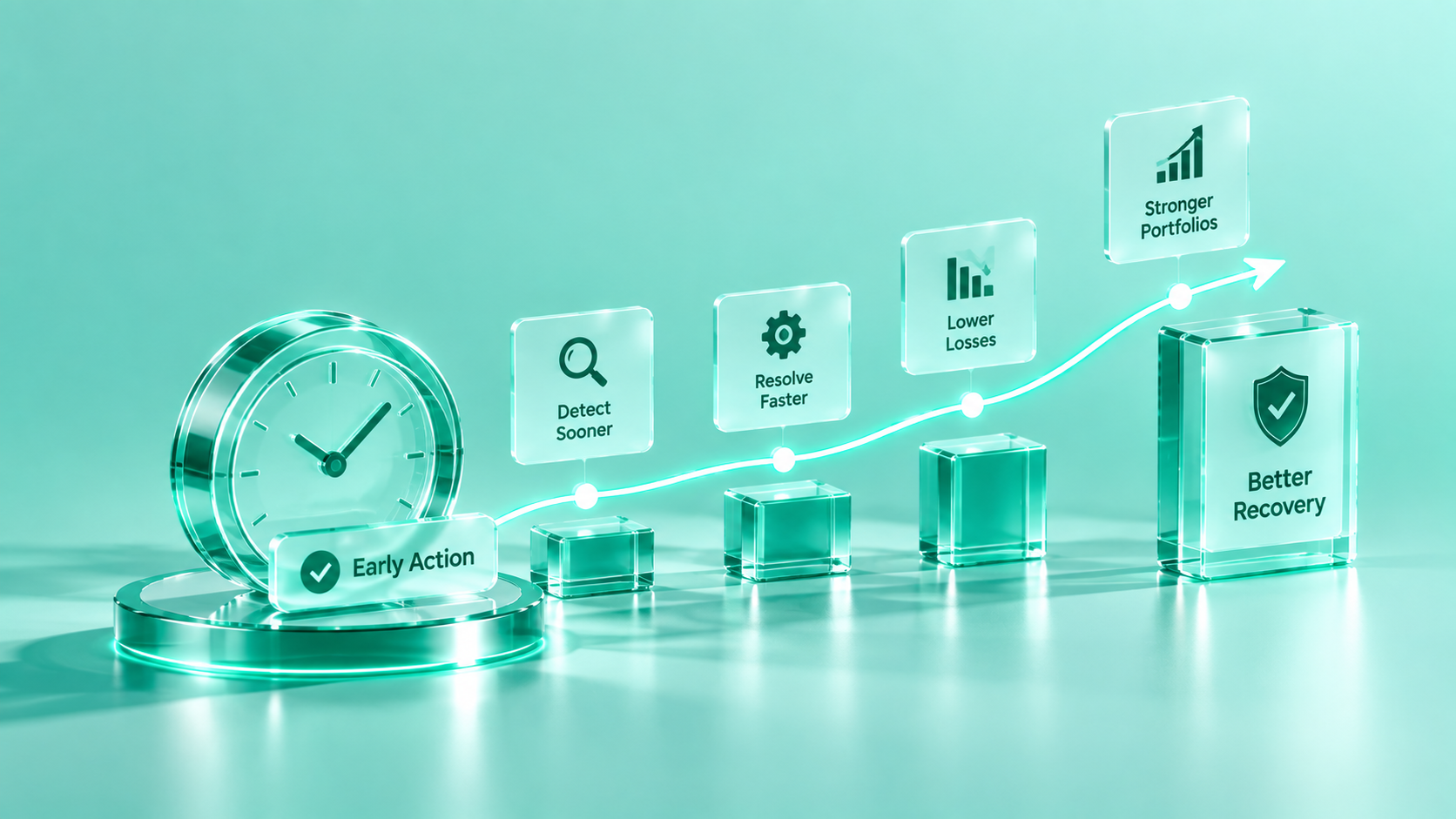
One platform for the whole recovery operation — with the strategy itself built visually: segmentation, treatment paths and templates configured by the collections team, executed automatically, measured continuously.

Digital-first reminders, self-cure portals and preventive analytics that reach the account at the first sign of stress. Most delinquency resolved before it ever becomes a case.

A telecalling command centre, field-agent management with mobile apps, skip tracing, and queues prioritised by behaviour rather than balance. Every call and visit aimed where it changes the outcome.

Legal case management, repossession workflow and settlement automation. The hardest cases run as governed process, not improvisation.

Code-of-conduct enforcement built into every channel, call-quality scoring, complete audit trails, escalation management and customersatisfaction tracking. Recovery the bank can defend — to the regulator, and to the customer it intends to keep.
Delivered across digital, telecalling, field and legal channels, coordinated as one strategy · ISO 27001 and SOC 2 · VECTOR low-code integration into core banking and the bank's lending systems.
Collections is queue management under uncertainty — and intelligence is how the queue gets smart. Repayment follow-up prioritised by likelihood, not alphabet; early stress signals raised from behaviour before one missed payment becomes three; call quality scored automatically, so coaching and compliance run on evidence rather than sampling. Over it sits SuperDash, the conversational layer: where the roll rates are moving, which treatments are working, which queues need people today.
The strategy stays the bank's — the intelligence makes it better aimed.


The collections advantage is the record. A bolt-on collections tool works from an extract — a balance, a phone number, a bucket. On Veefin, the account arrives with its whole history: the origination file, the repayment behaviour, every promise made and every contact logged — because collections shares one borrower record with origination and servicing. The conversation starts informed, the treatment fits the customer, and everything recovery learns flows back to credit.
The collections capability on this page runs in production across banks and non-bank lenders — as part of the connected lifecycle this family describes, with origination, servicing and recovery operating as one system. It is the closing link of an architecture already carrying live books, not a standalone tool finding its feet.

A collections operation is judged on what it recovers — but it is won on when it moves. Work the book in time order — cure early and digitally, aim people where they change the outcome, run the late book as governed process, hold the conduct bar throughout — on the full borrower record, and recovery stops being the book's write-off department. It becomes how the bank keeps both the money and the customer. The cheapest recovery is the earliest one. Build the operation that always moves first.