
Stand up a national financing ecosystem — a multi-lender marketplace or a guarantee-backed lending programme — on technology that is already running national infrastructure today. Built and operated by Veefin, launched one product at a time, so the ambition is national and the start is achievable.
Every government that cares about MSME financing eventually faces the same arithmetic: the credit gap is measured in points of GDP, and no scheme, subsidy or single institution can close it. What closes it is a market — more lenders competing for more borrowers, reached at lower cost through more channels, with the state able to see the whole flow. That is what financing infrastructure is for. A marketplace rail turns every lender's reach into the whole market's reach; a guarantee programme turns public credit enhancement into private lending capacity. For a consortium, the same logic at membership scale: infrastructure no single member could justify alone, owned collectively, working for all.
And beneath the public prize sits a quieter one: whoever builds the rail sets the market's standards — how borrowers are onboarded, how data moves, how lenders compete, how settlement runs. The institutions that stand up financing rails first will define how their markets finance themselves for a generation. That position is being claimed now, one country and one consortium at a time.
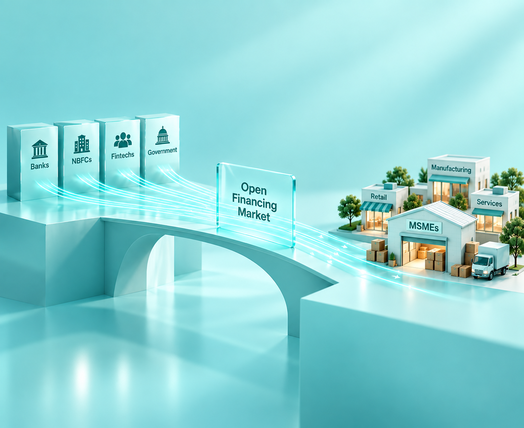
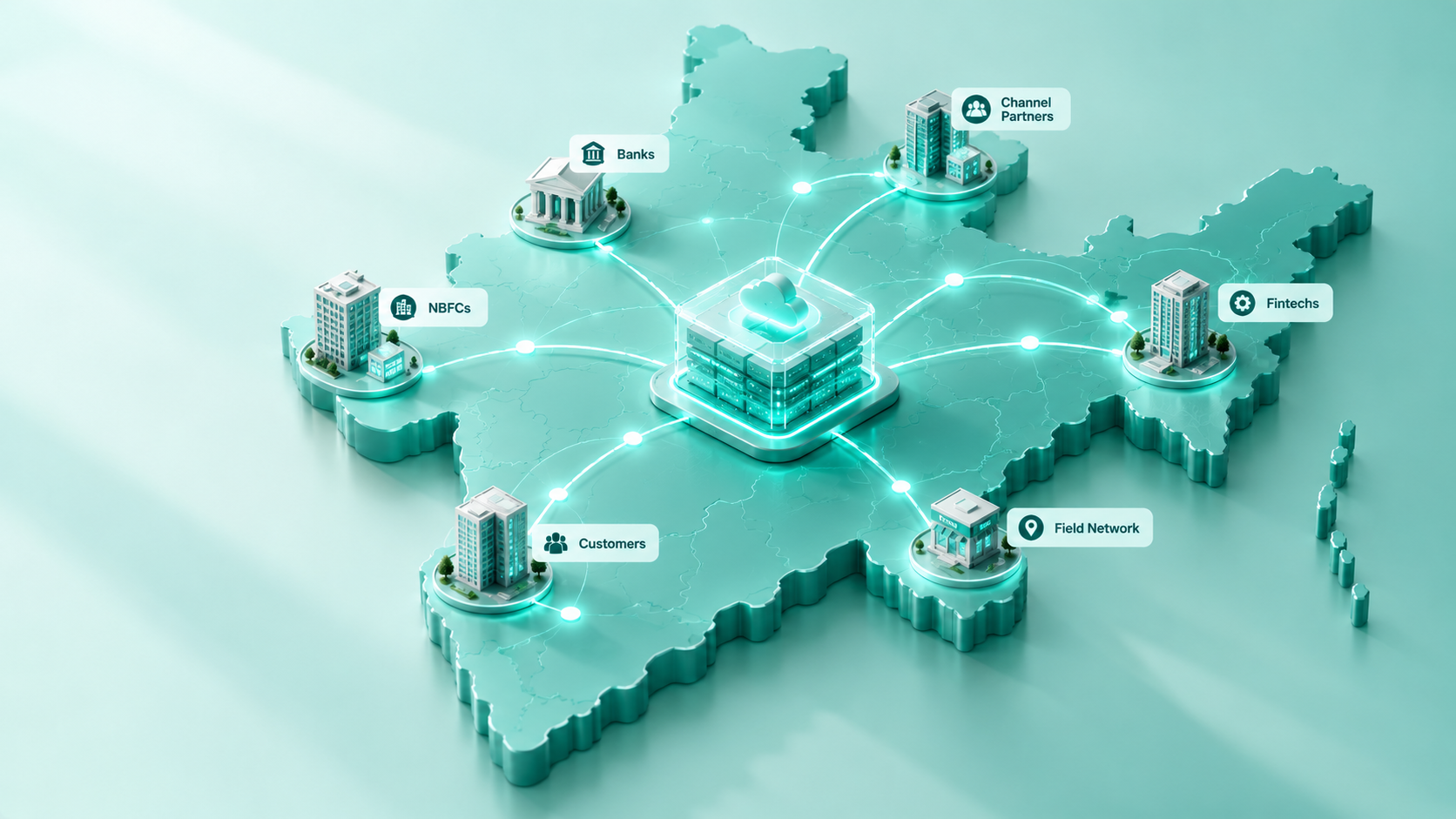
A working rail is easy to describe and rare to see — because most national platforms are portals, and a portal is not infrastructure.
In practice: every participating lender is one integration away from the whole market's deal flow — public banks, private banks, NBFCs, on the same rail under the same rules. Sourcing partners — platforms, aggregators, corporates — feed borrowers into the market rather than into any one institution's branch network. A borrower is onboarded once, with one KYC, and becomes visible to every financier on the rail. And the ministry, agency or consortium behind the programme sees the market move in real time — origination, sanction, disbursement — instead of waiting for quarterly returns.
Then it grows without rebuilding: launched with one product, the same rail carries the next, because participants connected once are connected for everything. That is the line between a scheme and infrastructure — a scheme ends with its budget line; a rail keeps working, and keeps widening, for as long as the market runs on it.
Not for lack of software. Most failed national platforms had software — a build contract, a launch event, a portal with a minister's photograph on it. What they never had was adoption. The lenders never fully integrated: every bank's core system, every NBFC's lending stack, a dozen credit and technology committees between the announcement and the first live transaction. The sourcing partners never signed, so the deal flow never came. The governance stalled: a consortium can agree to build a platform and still deadlock on who runs it, who prices it, and who answers when it breaks.
Underneath these sits the procurement mistake that produces them all: buying national infrastructure as if it were software — select a vendor, take delivery, cut the ribbon — and discovering too late that nobody owns the daily, unglamorous work that actually makes a market: onboarding lenders one by one, signing partners, running operations, holding the standard. A platform that launches and dies is worse than none. It spends the political capital, and the next attempt inherits the scepticism. The buyer's real risk is not choosing the wrong software. It is running the right software with no operator.
If adoption is the risk, then the decision that matters is not which software to buy — it is which operating model to run. This is where Veefin's method differs from a procurement:
Veefin builds the rail and runs it. Onboarding lenders one by one — through their committees, their core systems, their security reviews — until the market is populated. Signing and integrating sourcing partners, so the deal flow actually arrives. Running daily operations, settlement discipline and support. Holding the standard the rail was created to set. These are not implementation services that end at go-live; they are the operating capability a programme needs for as long as it intends to be infrastructure — and Veefin is the rare partner that already does this work, every day, on a live national rail.
And the launch is staged, not monumental. Start with the product the market needs most urgently, prove the rail in production, then extend on the same infrastructure — trade finance, term lending, guarantees — with participants connected once and connected for everything. No second platform, no re-integration, no fresh committee cycle per product. The programme's ambition can be national while its first delivery stays achievable — which is precisely what lets it start.
This page describes nothing Veefin hasn't already done. PSBXchange is India's national financing marketplace — mandated by PSB Alliance, the consortium of India's twelve public sector banks; built and operated by Veefin; and open nationally to other banks and NBFCs. It launched with supply chain finance, with trade finance and SME lending following on the same rail — the staged method of this page, running in production. Kafalah is Saudi Arabia's national SME credit-guarantee programme, running on Veefin's full guarantee stack — origination, management, claims and recovery — under a direct contract. Two national programmes, two very different markets, one model: build the rail, operate it, and let the market grow on it.
A national financing ecosystem is the rare initiative where every constituency wins — lenders reach borrowers they could never acquire alone, borrowers reach competition they never had, and the state sees its market whole for the first time. What stands between the ambition and that outcome is no longer technology; the technology exists, and it is proven in production. The difference between a platform announced and a market built is the operator. Veefin builds the rail, operates it, and grows it one product at a time — because it already does exactly this, at national scale, today. The rails that will define how markets finance themselves are being claimed now, one country and one consortium at a time. Build yours with the partner who already runs one.