India's national financing marketplace, built and operated by Veefin. Saudi Arabia's national SME credit-guarantee programme, running on Veefin's full guarantee stack. This page is the record.
Banking technology is a market of claims. Every vendor's deck says scalable, secure, proven; a demo can be rehearsed and a reference call arranged. National infrastructure is different, because it cannot be curated: it is multi-institution by construction, regulator-adjacent by definition, and publicly accountable when it fails. Nobody rehearses a nation's rail.
Veefin operates in that reference class today, in two markets. What follows is not a claim to evaluate but a record to verify.

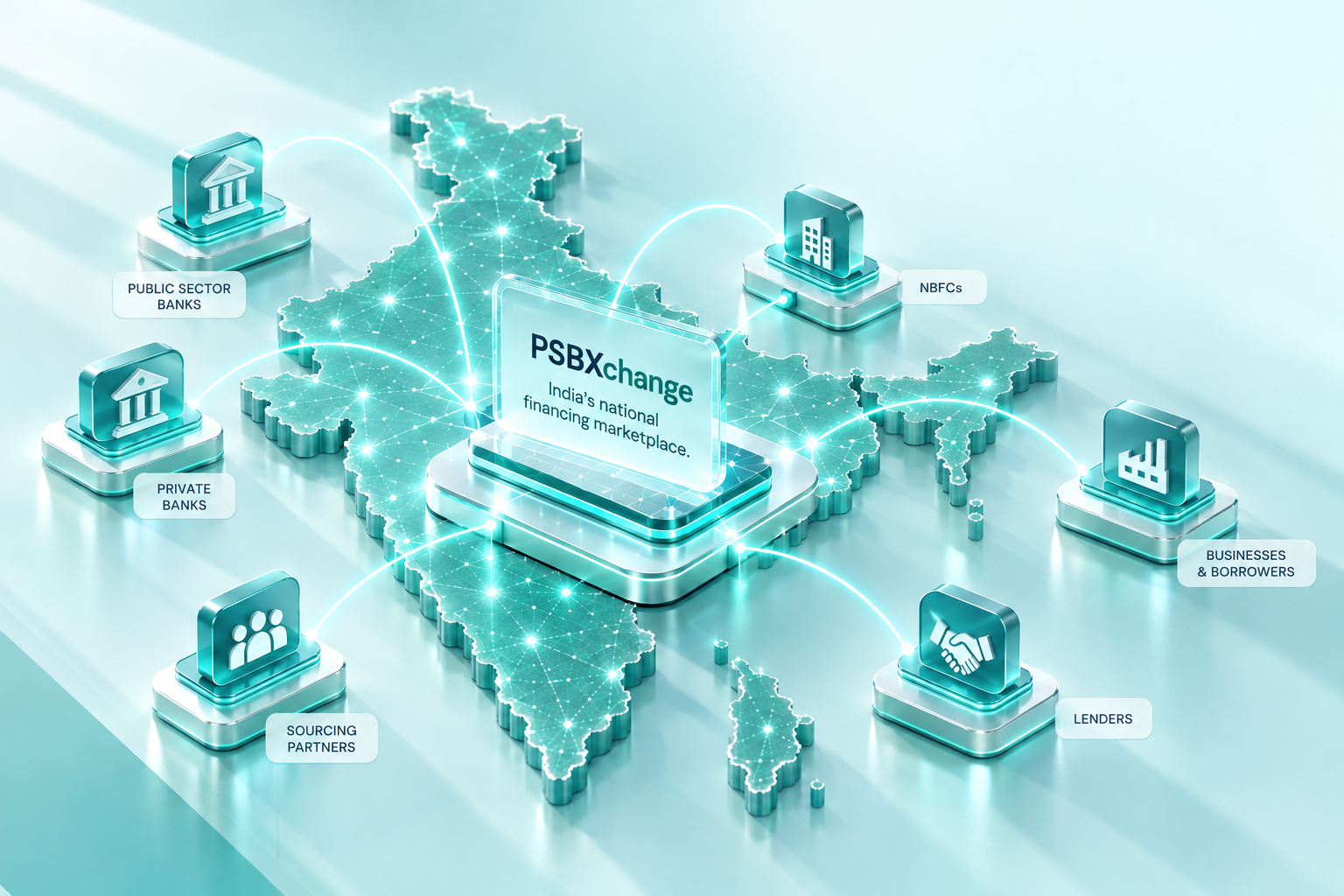
PSBXchange was mandated by PSB Alliance — the consortium of India's twelve public sector banks — and is built and operated by Veefin under long-term contract. It is a national financing marketplace: lenders, sourcing partners and borrowers transacting on one rail, opened nationally beyond the founding consortium to other banks and NBFCs. It launched with supply chain finance; trade finance and SME lending follow on the same infrastructure.
20+ lenders — public and private banks and NBFCs, live on the rail · 70+ sourcing partners — feeding deal flow into the market What it evidences: marketplace machinery at national scale — onboarding, matching, transacting, oversight — and the harder half, the operating capability that populated it: lenders onboarded through their own committees and core systems, a partner network signed and integrated, daily operations run to settlement discipline.
Kafalah, Saudi Arabia's national SME credit-guarantee programme, runs on Veefin's full guarantee stack — guarantee origination, management, and claims and recovery — with a web interface connecting the agency to every participating bank and financing partner. The contract is direct: Veefin has served the programme from day one.
What it evidences: the whole guarantee lifecycle running at sovereign standards — partner-intermediated origination, a governed contingentliability book, claims that conclude on process — in a second market and a second regulatory world from the first proof. One model, proven twice, differently.

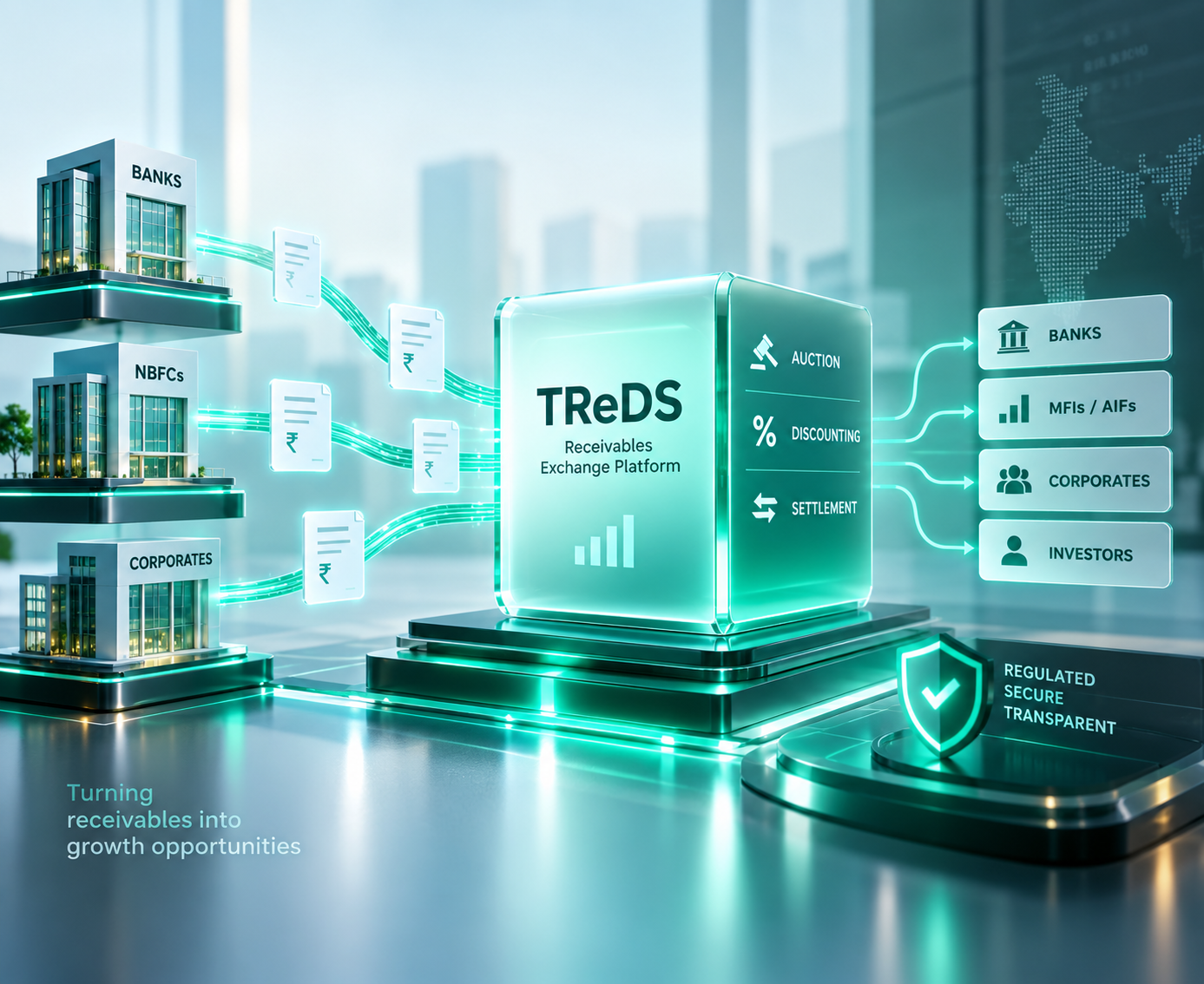
The infrastructure set includes productised receivables-exchange technology: the platform capability to power regulated trade-receivables auction marketplaces — in India, the TReDS model operating under the Payment and Settlement Systems Act, 2007. Veefin's position is precise: technology vendor to exchange operators — the auction, discounting and settlement machinery an operator runs under its own authorisation.
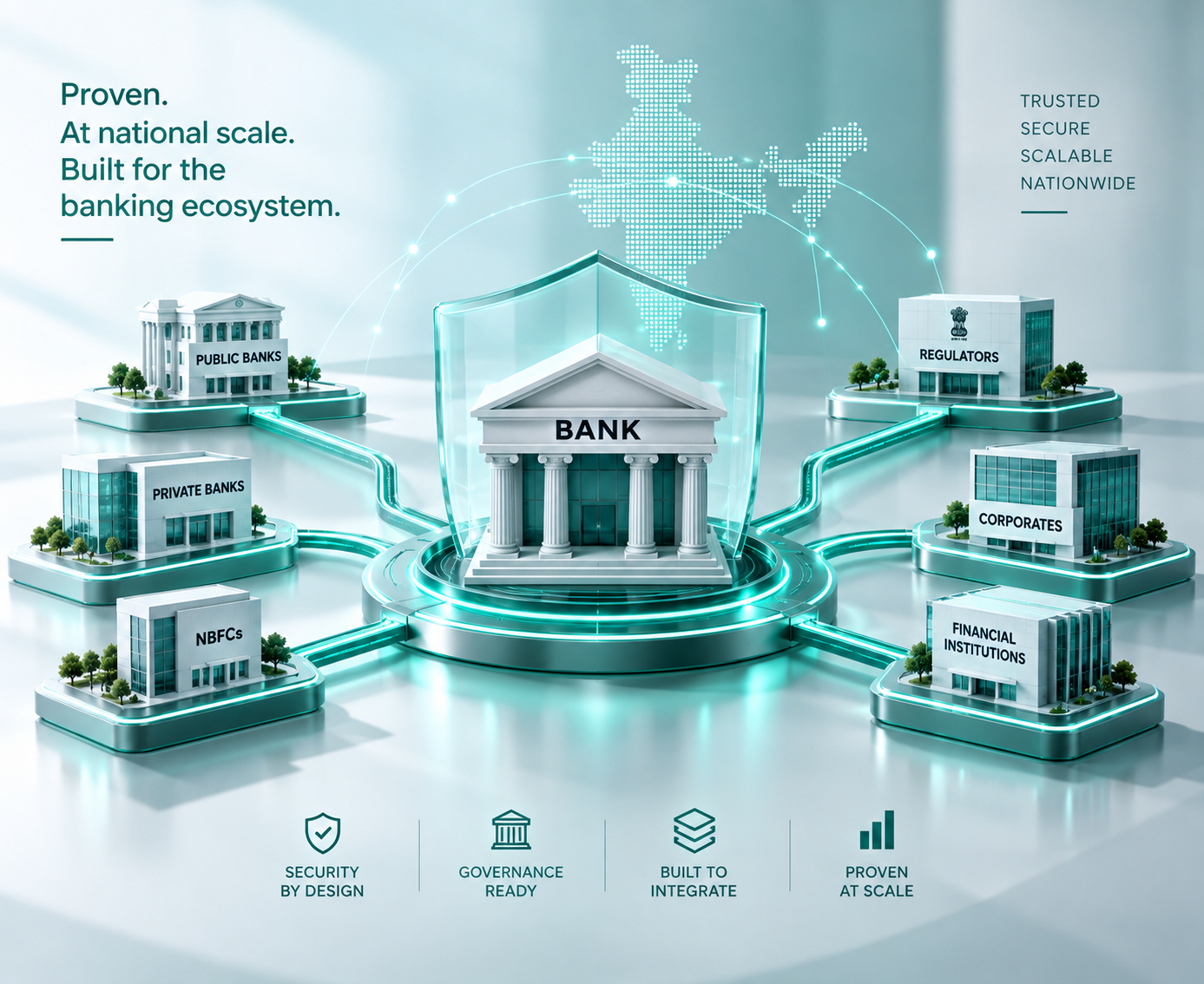
Most readers of this page will never commission a national rail. Read it instead as a procurement question answered: what does it take for a technology partner to be trusted with infrastructure a country depends on? Security and governance held to public-accountability standards. Integration across dozens of dissimilar institutions — public banks, private banks, NBFCs — each with its own core systems, committees and controls. Operations that hold at national volume, every day, with no quiet way to fail. And institutional permanence measured in long-term contracts, not funding rounds.
Those are the same qualities a bank is really procuring when it shortlists a lending, transaction-banking or risk platform. And the platform inside these programmes is not a special edition: it is the same Veefin 4.0 architecture that runs every Veefin product. A bank does not buy a diluted version of what a nation runs on.